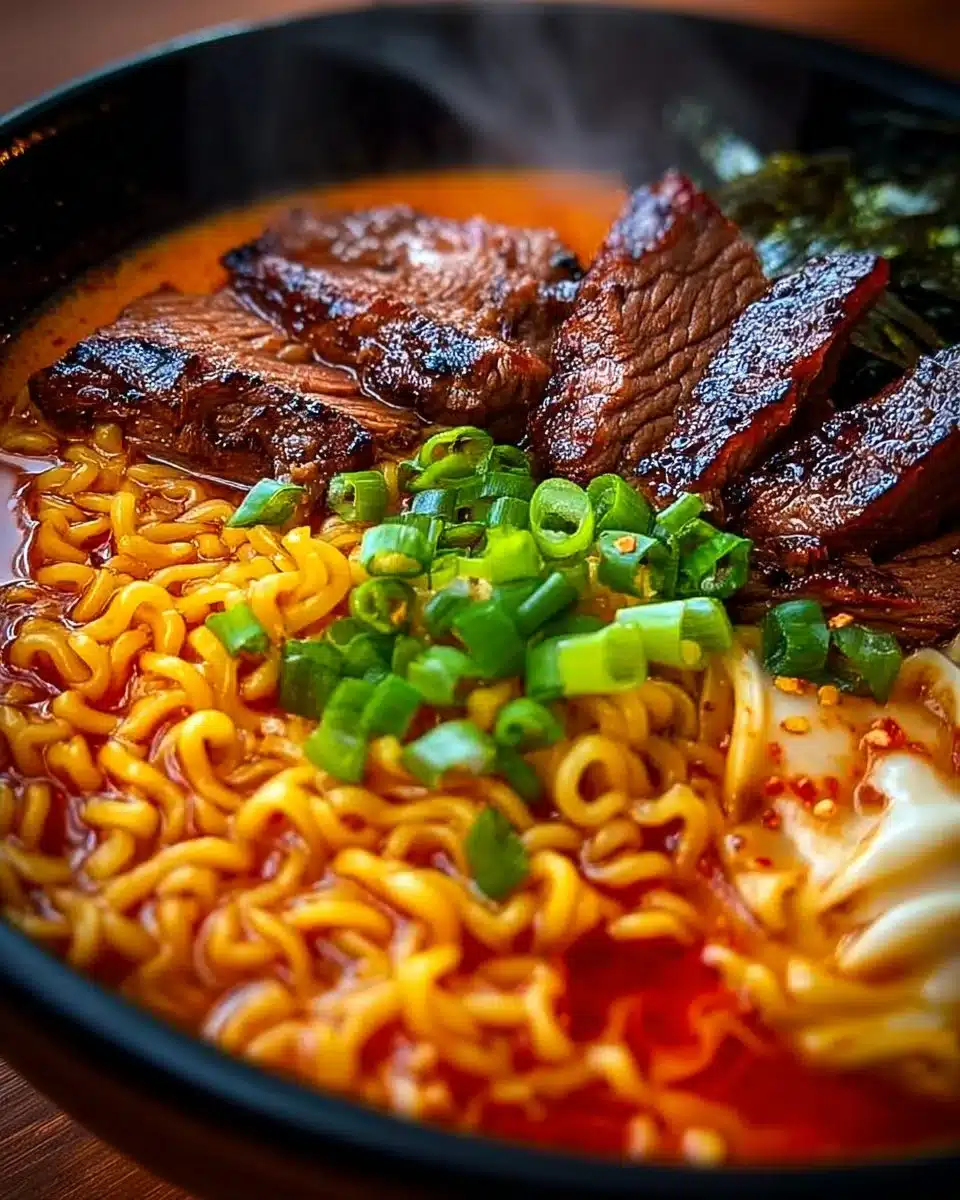
I can still hear the sizzle. It comes from the pan on a Tuesday night when school backpacks thump against the door and someone asks for a snack, fast. I toss garlic into sesame oil and the kitchen fills with that warm, sweet perfume that sounds like home. The broth bubbles softly on the back burner while the beef hits the hot grill and lifts a sweet, charred note into the air. Steam rises when I pour the creamy sauce over the bright red ramen and the kids crowd the table with eager eyes.
This is how Spicy Korean Ramen with Grilled Beef & Creamy Sauce found its way into our weekly rotation. It arrived in a hurry one night when the subway was stalled and we turned the delay into dinner. From there it became a bridge between after-school stories and slow family breaths, a bowl that asks for quick hands and gives back big comfort. Sometimes I pair it with a simple salad. Other nights it stands alone as the kind of food that makes you pause, spoon halfway to your mouth, and say, “Wait, smell that.” I also love how it connects to other quick comforts in my pantry, like the way I sometimes pair it with a meaty bite similar to my favorite garlic butter beef bites when a little extra heartiness is needed.
Why make Spicy Korean Ramen with Grilled Beef & Creamy Sauce? Because it gives you dinner in less than an hour, it layers spicy, savory, and creamy in a single spoonful, and it brings everyone to the table. It is a little fancy and mostly forgiving. My youngest once declared it “fancy soup,” which, in truth, is accurate. The charred beef tastes like a restaurant dish, while the broth stays cozy and family-friendly.
Why Spicy Korean Ramen
This dish loves chaos. It thrives in small kitchens, tight schedules, and the post-work scramble that many of us know well. It uses pantry staples: dried ramen noodles, a jar of gochujang, a carton of broth, and a small cut of beef. You can marinate the beef in the morning and cook it after work. Meanwhile, the ramen cooks in the time it takes to set the table and check homework.
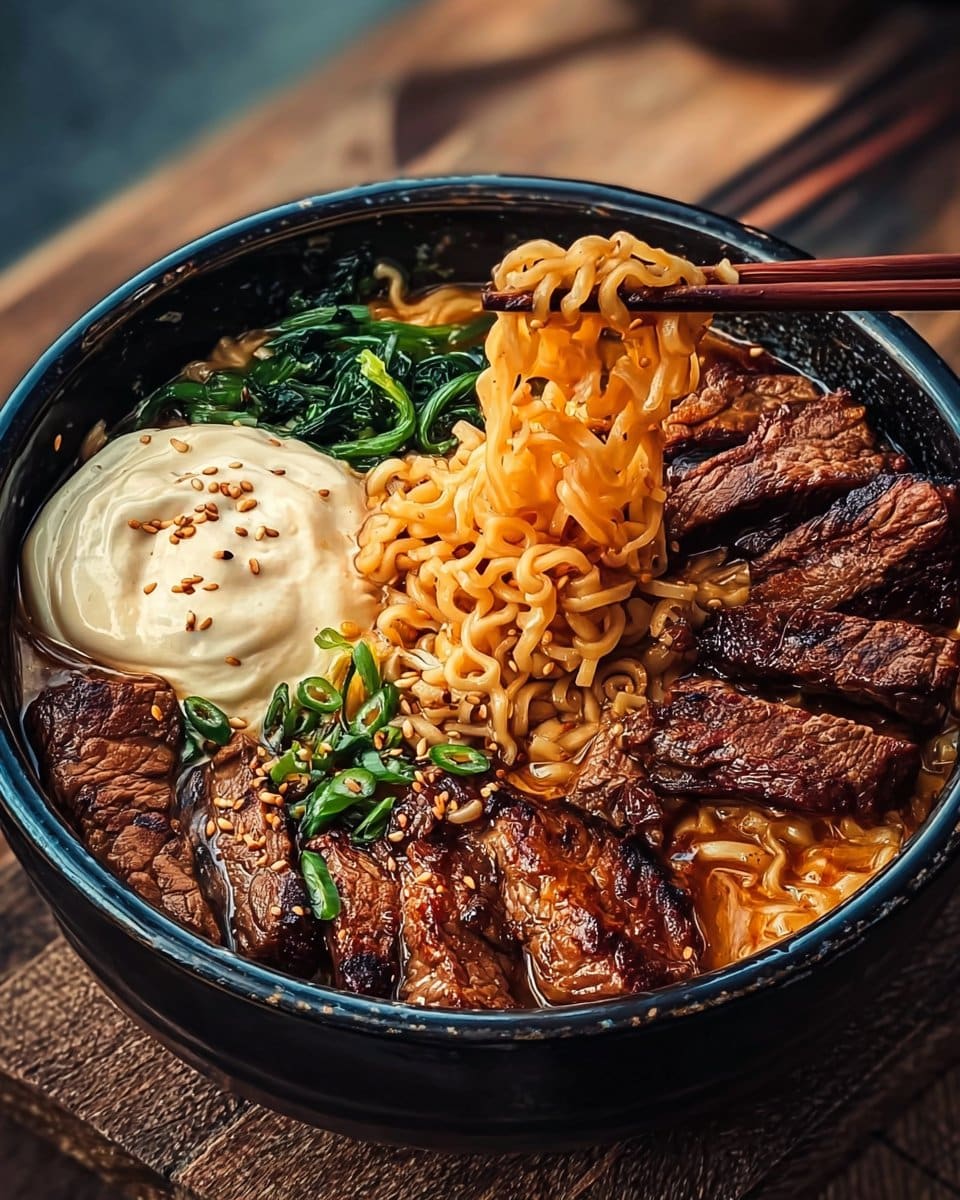
It also balances textures. The noodles are springy. The broth is silky from the cream. The beef is slightly crisp on the edges and soft inside. Kids will often take the beef first, and adults will argue over the last lick of broth. This meal gives you control. Turn the heat down if you want mild, or add an extra spoonful of gochujang for a bold night. Over the years, I have learned to tune the spice level for different moods. The result is a reliable, comforting bowl that looks like a splurge but comes together like a weeknight favorite.
Beyond convenience, the recipe brings people together. We eat ramen leaning close, sharing little stories between slurps and laughter. It is a meal that makes a damp evening feel brighter and a busy week feel manageable. There is power in feeding the family something warm, a small ritual that says, I made this for you.
Bringing Spicy Korean Ramen
“Every time I stir this pot, it smells just like Sunday at home.”
Before I list the ingredients, let me paint the scene of how the kitchen comes alive. I gather the scallions first. Their green ends are bright and sharp against my cutting board. I warm the skillet and listen for that initial spit when the beef hits the hot metal. Gochujang dissolves into the broth and turns it ruby red. The heavy cream softens the spice into a warm cloak. When I pull the grilled beef from the heat, the aroma is meaty, smoky, and just a hint sweet from the marinade. The noodles tumble into the broth like little soft ropes, and in seconds the bowl is a mix of colors: deep red, creamy white, green from scallions, and dark brown from the beef.
This is a dish of contrasts and comfort. Meanwhile, while the broth simmers, I tidy the counter and set bowls. From there, the table fills with small bowls of toppings extra sliced scallions, toasted sesame seeds, maybe a wedge of lime if someone asks for brightness. The kids like to smash a soft-boiled egg into the broth. Once it’s ready, we eat standing at the island if the timing is tight, or sitting down in a more relaxed way when we have the time. That choice is part of what keeps this recipe real for our family.
Ingredients You’ll Need
- Ramen noodles (fresh or dried)
- Beef for grilling (flank, skirt, or sirloin), about 1 pound
- Soy sauce
- Gochujang (Korean chili paste)
- Sesame oil
- Garlic (minced)
- Ginger (grated)
- Scallions (sliced)
- Vegetable broth
- Heavy cream
- Sugar
- Black pepper
- Cooking oil (neutral, like canola or vegetable)
- Optional toppings: soft-boiled eggs, toasted sesame seeds, lime wedges, kimchi
Kitchen utensils:
- Grill pan or outdoor grill
- Large pot for broth
- Tongs
- Cutting board and sharp knife
- Whisk or wooden spoon
- Measuring cups and spoons
Personal side notes:
- Use fresh scallions if you can; they give the dish that garden brightness.
- Choose a beef cut that grills quickly and slices thinly against the grain.
- If you don’t have heavy cream, whole milk with a tablespoon of butter will work in a pinch, though it will be slightly lighter.
I keep a few pantry items on hand that make this dish faster: bottled broth, pre-minced garlic, and a small jar of gochujang. A little planning can make a Tuesday night feel like a treat.
Step-by-Step Directions
- Cook the ramen noodles according to package instructions, then drain and set aside.
Tip: Cook them just until al dente. They will soften more in the broth. - Marinate the beef in a mixture of soy sauce, gochujang, sesame oil, garlic, ginger, and sugar. Allow to marinate for at least 30 minutes.
Tip: Marinate in the fridge. If short on time, even 15 minutes adds flavor. - Grill the beef until cooked to your preference, then slice thinly.
Tip: Watch for golden edges and a slight char. Let the beef rest for 5 minutes before slicing. - In a pot, combine vegetable broth and bring to a boil. Stir in gochujang, heavy cream, and season with pepper as desired.
Tip: Whisk the gochujang into a ladle of warm broth first so it dissolves evenly. Stir until creamy. - Add the cooked ramen noodles to the broth and gently mix.
Tip: Use tongs to fold noodles into the soup so they don’t break. - Serve the ramen in bowls, topped with grilled beef and garnished with sliced scallions.
Tip: Add a soft-boiled egg or toasted sesame seeds for extra richness.
These steps keep things focused. I like to do them in an order that keeps the kitchen calm: marinate, prep toppings, grill, finish the broth, then combine. That flow cuts down on juggling pans and keeps dinner moving.
Serving Spicy Korean Ramen
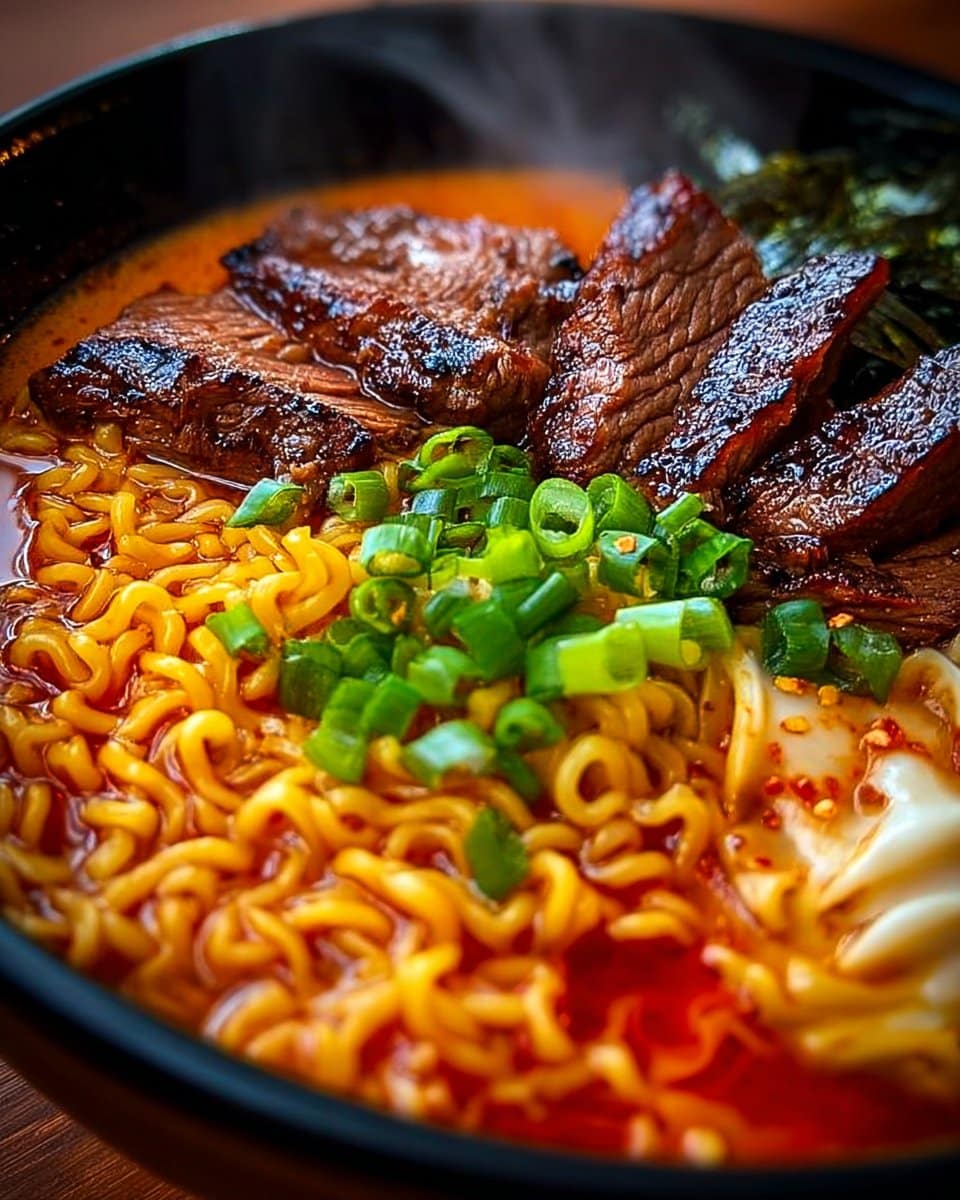
Serving this ramen feels like setting a small celebration. I use wide bowls that show off the layers: the creamy broth forms a pale base, the noodles curl in the middle, and the beef lies like a ribbon on top. Scallions sprinkled on make everything feel bright. The table is simple: chopsticks, spoons, a small plate for discarded bones or shells, and a pitcher of water.
My girls love when I set out extra condiments a little pile of kimchi, a small dish of soy for dipping beef, and an extra squeeze of lime. One winter evening the youngest asked if we could eat by the window to watch the snow while slurping. We did, and the steam fogged the glass in perfect little hearts. People react differently. My partner always reaches for extra broth. The kids fight playfully over the last strip of beef. These small moments are the reason I cook a dish like this: it brings the family into a shared rhythm.
Pairings that work well:
- A simple cucumber salad tossed in rice vinegar for a crisp counterpoint.
- Steamed broccoli or quick sautéed spinach to add vegetables.
- A small bowl of pickled vegetables or kimchi for bright acidity.
Tools for service:
- Wide ramen bowls help cool the broth faster so little mouths can eat safely.
- Wooden spoons give a rustic feel and help scoop the creamy broth.
- Chopsticks make the meal interactive. If your kids are still learning, provide forks too.
I like to set a calm tone at dinner. The ramen invites conversation. It fills the room with scent and color, and somehow, that makes the night feel a little easier.
Storing and Reheating Spicy Korean Ramen
Leftovers are a reality. Here is how we make them work best.
Storing:
- Keep broth and noodles separate if possible. Store broth in an airtight container for up to 3 days.
- Store grilled beef in a shallow container with a touch of its marinade or a splash of soy to keep it moist.
- If you must store the combined bowl, use an airtight container and plan to eat it the next day.
Freezing:
- I do not recommend freezing the cooked noodles; they become soft when thawed.
- Freeze the broth (without noodles) in a freezer-safe container for up to 2 months. Thaw overnight in the fridge.
Reheating:
- Reheat broth gently on the stove. Bring to a low simmer and whisk in a splash of water or stock if it has thickened in the fridge.
- Heat beef on a plate in the microwave in short bursts or quickly warm it in a skillet with a splash of oil.
- Cook fresh ramen noodles just before serving and add them to reheated broth. This keeps the texture springy.
Leftover ideas:
- Turn leftover grilled beef into a quick rice bowl the next day.
- Use reheated broth with rice or vegetables for a light soup lunch.
- Mix leftover noodles into a stir-fry for a new dinner.
Flavors deepen overnight. The spice and sweet from the marinade settle into the beef, the broth grows richer, and the meal becomes even more comforting.
Quick Tips from My Kitchen
- Timing trick: Start the broth five minutes before the beef finishes grilling. That way, everything comes together at once and feels fresh.
- Swap tip: If you do not have gochujang, use a mix of chili paste and a little miso for umami. Taste as you go.
- Texture cue: Slice the beef thin against the grain for tenderness. Watch for that quick sear on each side.
- Cream note: Add heavy cream at the end and whisk just until blended. Do not boil the cream hard, or it may separate.
- Kid-friendly option: Reduce the gochujang by half and add a small spoonful of honey to keep the flavor rounds smooth.
These are the little things I do to keep the kitchen sane and the dinner table happy.
Variations on Spicy Korean Ramen
This recipe is a canvas. Change one or two things and it becomes new.
Vegetable-forward:
- Use thin slices of mushrooms and bok choy for an earthy version. Sauté them before adding to broth.
- Add carrots and bell peppers for color and crunch.
Seafood twist:
- Replace beef with grilled shrimp. Marinate briefly and cook until pink. The creamy broth pairs beautifully with shellfish.
Lower-fat option:
- Substitute half-and-half or whole milk with a little cornstarch slurry for a lighter creaminess.
- Use leaner cuts of beef and trim visible fat.
Noodle swap:
- Use fresh udon or soba noodles for a different bite. Adjust cook time as needed.
Regional twist:
- Add a touch of miso paste to the broth for added depth, leaning into a Japanese-Korean fusion.
- For a New York twist, top each bowl with a sprinkle of toasted sesame and a drizzle of chili oil for city-style heat.
Family-friendly swaps:
- Keep a small bowl of plain noodles for kids who prefer less spice.
- Offer yogurt or milk at the table for little ones who need a gentle palate soother.
When I cook in the city, I enjoy blending flavors from around the world. This ramen honors Korean classics while being flexible enough to reflect what is in your fridge.
Print
Spicy Korean Ramen with Grilled Beef & Creamy Sauce
- Total Time: 50 minutes
- Yield: 4 servings
- Diet: Non-Vegetarian
Description
A comforting and flavorful bowl of ramen featuring grilled beef and a creamy spicy broth, perfect for busy families.
Ingredients
- Ramen noodles (fresh or dried)
- 1 pound beef for grilling (flank, skirt, or sirloin)
- 3 tablespoons soy sauce
- 2 tablespoons gochujang (Korean chili paste)
- 2 tablespoons sesame oil
- 3 cloves garlic (minced)
- 1 tablespoon ginger (grated)
- 2 scallions (sliced)
- 4 cups vegetable broth
- 1/2 cup heavy cream
- 1 tablespoon sugar
- Black pepper to taste
- Cooking oil (neutral, like canola or vegetable)
- Optional toppings: soft-boiled eggs, toasted sesame seeds, lime wedges, kimchi
Instructions
- Cook the ramen noodles according to package instructions, then drain and set aside.
- Marinate the beef in a mixture of soy sauce, gochujang, sesame oil, garlic, ginger, and sugar for at least 30 minutes.
- Grill the beef until cooked to your preference, then slice thinly.
- In a pot, combine vegetable broth and bring to a boil. Stir in gochujang, heavy cream, and season with pepper.
- Add the cooked ramen noodles to the broth and gently mix.
- Serve the ramen in bowls, topped with grilled beef and garnished with sliced scallions.
Notes
To reduce the spice, decrease the amount of gochujang and add honey. Fresh scallions enhance the dish’s brightness. For a vegetarian option, substitute beef with grilled tofu or mushrooms.
- Prep Time: 30 minutes
- Cook Time: 20 minutes
- Category: Main Course
- Method: Grilling & Cooking
- Cuisine: Korean
FAQs About Spicy Korean Ramen
Can I make this recipe ahead of time?
Yes. I often marinate the beef in the morning and keep it in the fridge until dinner. I also make the broth an hour ahead and reheat gently. Preparing elements ahead saves time.
How spicy is this dish?
It depends on how much gochujang you use. For a mild bowl, reduce the gochujang by half and add a little honey. For a spicy kick, add an extra spoonful or top with chili oil.
What cut of beef works best?
Flank, skirt, and sirloin grill quickly and slice easily against the grain. They soak up the marinade well and hit a nice balance of tenderness and char.
Can I make this vegetarian?
Yes. Replace beef with grilled tofu or mushrooms and use vegetable broth. Add a touch of soy and smoked paprika to give a meaty depth.
How long does the marinade need to be?
At least 30 minutes is best for flavor. If you have more time, a few hours up to overnight deepens the taste. If you are in a rush, 15 minutes still adds flavor.
What I’ve Learned Cooking Spicy Korean Ramen with Grilled Beef & Creamy Sauce
This recipe taught me the value of small rituals. Marinating the beef feels like a promise to the evening. Stirring the gochujang into warm broth is one of those small acts that lifts a tired day into something delicious. I learned that kids often surprise you; give them a bite of the grilled beef and they might suddenly try new flavors. I also learned practical lessons in timing: when the grill is hot, the beef cooks fast, so prepare your toppings ahead of time.
Cooking this ramen showed me that rich flavor and family time do not need long hours. A twenty-something minute active cook time can yield food that feels like love. It also reminded me to treasure the tiny kitchen sounds the sizzle, the stir, the clink of chopsticks. Those are the sounds that mark a life well-lived, even on weeknights.
I sometimes pair this meal with a lighter soup from my pantry for different nights, such as a comforting gnocchi soup that feels like a hug, similar in warmth to my favorite bacon cheddar gnocchi soup. Those are the meals we return to when we want comfort with a little variety.
A Final Thought
There is something tender about feeding people in the middle of a busy week. Spicy Korean Ramen with Grilled Beef & Creamy Sauce gives you the quick joy of takeout with the deeper satisfaction of home cooking. It is a dish made for sharing, for quick hugs at the kitchen island, and for conversations that stretch between spoonfuls. Cooking it taught me to savor small routines and to welcome the unpredictable rhythms of family life.
If you want a recipe that feels special and still fits into the week, this one is a keeper. It gives you room to play, to adjust, and to make it your own. I hope it brings warmth and ease to your table the same way it has to mine.
Conclusion
If you want to follow the original proportions and ideas behind this bowl, check out this detailed version of Spicy Korean Ramen With Grilled Beef & Creamy Sauce for extra guidance and visuals: Spicy Korean Ramen With Grilled Beef & Creamy Sauce. If you are curious about other noodle ideas and want inspiration on how restaurants frame their bowls, take a look at this menu for quick ideas you can adapt at home: Our Menu – Noodles & Company.
Thank you for letting me share this recipe. I hope it brings comfort, a little spice, and a lot of togetherness to your table.