The first sound that draws me into the kitchen is the soft sizzle of olive oil meeting hot pan. Then comes the scent of onion and garlic, warm and familiar, like a welcome. I remember a rainy Saturday in Brooklyn when my daughters were little. They pressed their noses to the kitchen counter, watching steam curl up as I ladled lobster bisque into tiny bowls. The color was a gentle coral that promised comfort. In those moments, cooking felt like a hug messy, loud, and utterly worth it.
Why Lobster Bisque Works for Busy Families
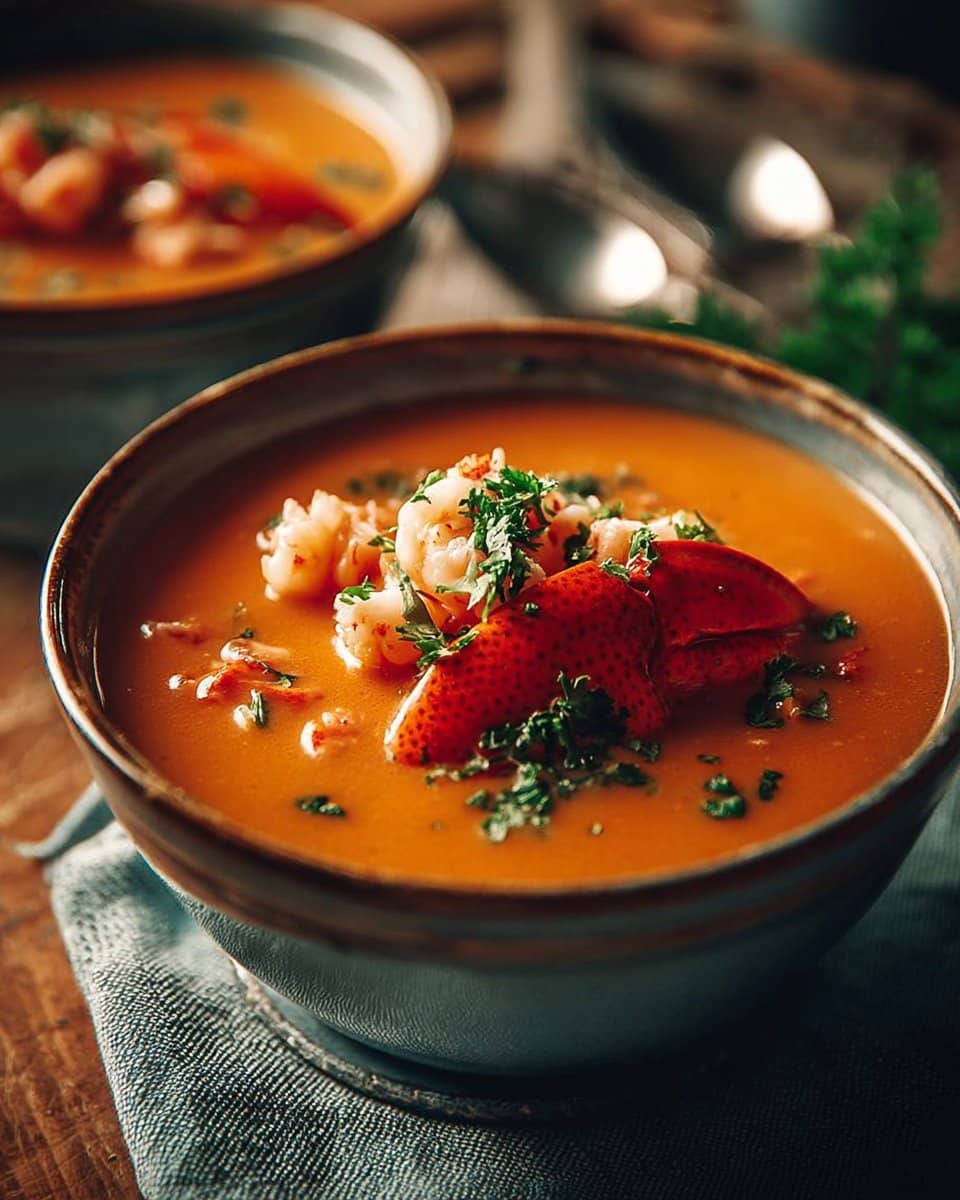
There are dishes that feel special and dishes that feel possible on a weeknight. Lobster bisque sits beautifully between the two. It looks elegant enough for guests, yet it can be assembled in stages so it fits into a busy life. Once it’s ready, it gives you that cozy, restaurant-quality warmth without the restaurant wait.
At our apartment in the city, I learned to break big recipes into small pockets of time. Meanwhile, my husband would set the table and the girls would pick out crackers. By the time dinner was on the table, the house smelled of caramelized vegetables and butter. The spoonfuls quieted chatter and pulled everyone together. That memory is part of why I keep making this bisque. It brings company, celebration, and quiet weeknight comfort all at once.
How to Make Lobster Bisque
“Every time I stir this pot, it smells just like Sunday at home.”
Before I list the ingredients, let me paint the process. You start with a pot that warms up slowly, the olive oil shining like a tiny lake. The onions soften and turn translucent. Carrots and celery add a sweet hum to the aroma. When you add tomato paste and let it brown a bit, the scent deepens and the kitchen takes on that shellfish-shop tang once the wine and lobster shells join the party.
This dish is about layering flavors. From the bright acidity of wine to the deep, mineral edge from shells simmered in stock, each step builds on the last. The bisque finishes silky thanks to heavy cream, but the real magic comes from the shells and the patient simmer that coaxes out a rich marine flavor. It is both a technical and a heartwarming project: a few precise actions, and a lot of gentle waiting.
Ingredients You’ll Need
Lobster tails (4 medium-sized)
Olive oil (2 tablespoons)
Onion (1, chopped)
Carrots (2, chopped)
Celery stalks (2, chopped)
Garlic cloves (2, minced)
Tomato paste (2 tablespoons)
Dry white wine (1 cup)
Seafood or chicken stock (4 cups)
Fresh thyme (1 teaspoon)
Bay leaf (1)
Heavy cream (1 cup)
Salt and pepper (to taste)
Fresh parsley (for garnish)
Personal note: If you have access to fresh herbs like chives or tarragon, a little of either stirred in at the end can lift the flavor. Use fresh parsley for garnish; it brightens the color and the taste. If lobster is hard to find, good quality frozen lobster tails work fine. I keep a couple in the freezer for those last-minute family dinners.
Step-by-Step Directions
- Prepping the Lobster: Begin by cooking the lobster tails. You can steam or boil them – whichever you prefer. Once they’re cooked, remove the meat from the shells and chop it into bite-sized pieces. Keep those shells handy; we’ll use them for extra flavor. Use tongs to handle the shells. Let the meat rest in the fridge while you build the base.
- Building the Base: In a large pot, heat the olive oil. Toss in the chopped onions, carrots, and celery. Cook them until they’re soft and the onions are translucent. Then, add the minced garlic and cook for another minute. Stir often. Watch for golden edges on the carrots and celery that hint of color adds depth.
- Flavor Intensification: Stir in the tomato paste and cook for a few minutes. This step is crucial for deepening the flavors. Now, pour in the white wine and let it simmer, scraping up any bits from the bottom of the pot. Let the wine reduce by about half. This concentrates the acidity and sweetness and makes the base sing.
- Simmering the Soup: Add the lobster shells, seafood or chicken stock, thyme, and bay leaf. Let this simmer for about 30 minutes. The shells are the secret to that rich, seafood flavor. Keep the pot at a gentle simmer. You will see the broth take on a deeper color and a fuller smell as the shells release their umami.
- Removing Shells: After the soup has simmered with the lobster shells for about 30 minutes, you’ll need to remove them before the next step. This is typically done by straining the soup through a fine mesh sieve or picking out the shells with tongs. The goal is to capture all the rich flavors from the shells while ensuring the soup’s texture remains smooth and enjoyable. Press gently through the sieve to extract the last savory drops.
- Blending Time: Remove the bay leaf and thyme sprigs. Using a blender or an immersion blender, purée the soup until smooth. If you prefer a chunkier texture, feel free to skip this step. I like it velvety, so I blend until no flecks remain. Be careful when blending hot liquids; work in batches and vent the lid slightly so steam can escape.
- Finishing Touches: Return the soup to the pot (if you used a blender) and stir in the heavy cream. Add the chopped lobster meat and cook for a few more minutes until everything is heated through. Season with salt and pepper to taste. Stir until creamy and fragrant. If the bisque seems too thick, add a splash of stock or water to reach your ideal texture.
- Ready to Serve: Ladle the bisque into bowls, garnish with a bit of parsley, and there you have it – a luxurious lobster bisque that’s sure to impress your family and friends! Pair with crusty bread or a small salad. Watch the steam lift off each bowl and enjoy that first spoonful.
Tips woven into the steps: Use an immersion blender if you want to skip transferring hot soup. Keep a small towel handy to hold the blender steady. Taste and adjust salt at the end; cream can soften the seasoning.
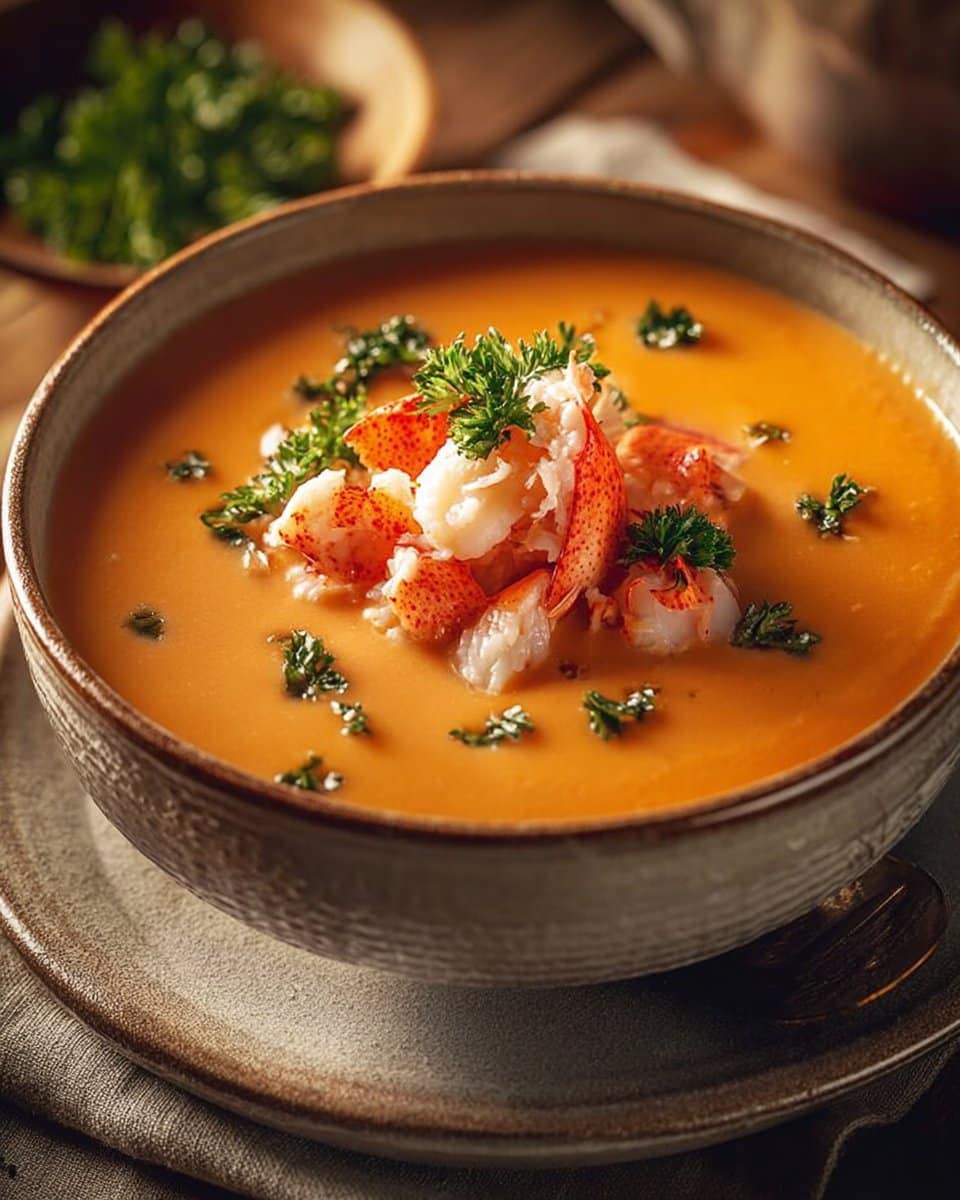
Make the table cozy. Use mismatched bowls if you like. A loaf of fresh bread and a simple green salad are enough to round the meal. For special nights, a splash of sherry poured into each bowl adds a classic touch. For weeknights, a slice of toasted sourdough and some butter keeps things simple and satisfying. My husband likes to crumble a buttered cracker over his bowl. The kids prefer extra lobster pieces and buttery bread for dipping.
Details that matter: serve hot but not scalding. Ladle gently so each bowl gets a good scoop of lobster meat. If you are serving guests, station the bisque in a warming pot so it stays at the right temperature without overcooking the lobster.
Storing and Reheating Lobster Bisque
Leftovers from lobster bisque are a real treat. Store the bisque in an airtight container in the refrigerator for up to 3 days. The flavor often deepens overnight as the ingredients settle into each other.
Freezing note: You can freeze the bisque, but heavy cream can separate a bit when thawed. To reduce this, cool the bisque quickly, then freeze in shallow containers for faster thawing. It will keep for up to 3 months. Thaw in the fridge overnight before reheating.
Reheating: Reheat gently on the stovetop over low heat. Stir often to bring the soup up to temperature without boiling. Add a splash of stock if it seems thick. If the cream has separated a little, whisk vigorously or use an immersion blender for a minute to smooth it out. Add the lobster meat toward the end so it warms through but does not become rubbery.
Making bisque into leftovers: Use leftover bisque as a sauce for pasta or as a base for seafood risotto. Add fresh herbs and a squeeze of lemon to brighten it before serving. The bisque’s richness makes a small amount go a long way.
Quick Tips from My Kitchen
- Save the shells. Those leftover shells are liquid gold. Freeze them if you can’t make the stock right away. I keep a bag in the freezer labeled “soup shells.” When a busy week hits, I pull them out and have a head start on flavor.
- Use a good stock. If you do not have homemade seafood stock, choose a high-quality seafood or chicken stock. It makes a big difference in depth without adding time.
- Brown the tomato paste. Don’t skip browning the tomato paste. Give it a few minutes in the hot pan and watch the color deepen. That little bit of caramelization adds richness and rounds out the flavors beautifully.
- Check the seasoning at the end. Salt and acid change as the soup reduces and you add cream. Taste at the end and adjust. A squeeze of lemon can brighten a heavy bowl.
- Keep lobster meat as last-minute. Add the lobster meat only at the end to keep it tender. Overcooked lobster turns firm and loses its delicate texture.
What I’ve Learned Cooking Lobster Bisque
When the girls were little, I learned to read the recipe like a map. It told me where to go next, but I could still pause to help with homework, set out napkins, or answer a quick question. This recipe rewards patience. A slow simmer and careful seasoning yield a bowl that feels like an occasion.
I also learned that you do not need perfect ingredients to get perfect results. Fresh is lovely, but frozen lobster and a good-quality store stock can bring a weeknight version to life. You can lean on technique instead of rare items. Brown your paste. Reduce your wine. Simmer the shells. The steps build what the price tag does not.
Variations on Lobster Bisque
Family Twist: Add a handful of corn kernels for a sweet pop. The kids loved the surprise texture when mine were small. Corn keeps the dish playful without stealing lobster’s spotlight.
New York Spin: Fold in a touch of tarragon and a squeeze of lemon. The herb’s anise notes and the acidity brighten the richness, a nod to the city’s love of balancing bold flavors.
Healthier Swap: Use half-and-half or a mix of milk and a tablespoon of cornstarch to thicken if you want less heavy cream. The texture will be slightly lighter but still satisfying. Increase the stock a bit to preserve the bisque’s body.
Spicy Version: Add a pinch of cayenne or a splash of hot sauce after adding the cream. A little heat lifts the richness and pairs beautifully with the lobster.
Vegetarian-Friendly Idea: Make a bisque-inspired soup using roasted red peppers and smoked paprika for depth, and use vegetable stock. It will not be lobster bisque, but it keeps the silky texture and warmth when you want a meat-free option.
Print
Lobster Bisque
- Total Time: 80 minutes
- Yield: 4 servings
- Diet: Gluten-Free
Description
A cozy and elegant lobster bisque that’s perfect for busy weeknights and special occasions.
Ingredients
- 4 medium-sized lobster tails
- 2 tablespoons olive oil
- 1 onion, chopped
- 2 carrots, chopped
- 2 celery stalks, chopped
- 2 garlic cloves, minced
- 2 tablespoons tomato paste
- 1 cup dry white wine
- 4 cups seafood or chicken stock
- 1 teaspoon fresh thyme
- 1 bay leaf
- 1 cup heavy cream
- Salt and pepper, to taste
- Fresh parsley, for garnish
Instructions
- Begin by cooking the lobster tails. You can steam or boil them. Remove the meat from the shells and chop it into bite-sized pieces, keeping the shells for flavor.
- In a large pot, heat the olive oil. Add the chopped onions, carrots, and celery, cooking until soft and the onions are translucent. Then, add the minced garlic and cook for another minute.
- Stir in the tomato paste and cook for a few minutes. Pour in the white wine and let it simmer, scraping any bits from the bottom. Reduce the wine by about half.
- Add the lobster shells, seafood or chicken stock, thyme, and bay leaf. Let this simmer for about 30 minutes.
- Remove the lobster shells by straining the soup through a fine mesh sieve or using tongs.
- Remove the bay leaf and thyme sprigs. Blend the soup until smooth, using a blender or immersion blender.
- Return the soup to the pot and stir in the heavy cream. Add the chopped lobster meat and cook for a few minutes until heated through. Season with salt and pepper to taste.
- Ladle the bisque into bowls, garnish with parsley, and serve hot.
Notes
Use fresh parsley for garnish; it brightens both color and flavor. Last-minute tips: reserve lobster meat to add at the end for tenderness.
- Prep Time: 20 minutes
- Cook Time: 60 minutes
- Category: Soup
- Method: Stovetop
- Cuisine: French
FAQs About Lobster Bisque
Can I make this recipe ahead of time?
Yes. I often prep it in the morning before the girls wake up, then finish it right before dinner. The flavors meld beautifully and it saves time in the evening.
Can I use frozen lobster tails?
Yes. Frozen lobster tails work well. Thaw them overnight in the refrigerator and treat them the same as fresh for cooking and extracting shells if they came with shells.
How long does it take to make from start to finish?
Plan on about 1 hour and 15 minutes from start to finish. That includes cooking lobster tails, building the base, simmering with shells for 30 minutes, and finishing the bisque. If you are short on time, do the shell simmer earlier in the day.
Is there a substitute for heavy cream?
You can use half-and-half or a mixture of milk and cornstarch for a lighter version. The result is slightly less rich, but still creamy. Add the alternative slowly and taste as you go.
Can I freeze the bisque?
Yes, you can freeze it for up to 3 months. Thaw overnight in the refrigerator and reheat gently. Expect a slight change in texture because of the cream; whisk or blend briefly to bring it back together.
A Final Thought
Cooking lobster bisque taught me to slow down and savor little pleasures. It is a dish that asks a bit more from you than a plain soup, but it gives back in warmth, elegance, and the kind of flavor that makes guests and family slow down too. Each ladle is a moment to gather around the table and share stories, big and small.
I hope this recipe becomes one of those comforting staples in your home, the kind you reach for when you want something special that still reads as doable. It fits into busy routines if you break it into steps. It rewards patience. And most importantly, it feeds people in a way that stays with them.
Conclusion
If you want more techniques or a classic version to compare, take a look at this detailed recipe from Coley Cooks: Classic Creamy Lobster Bisque – Coley Cooks. For another perspective and a well-tested method, Serious Eats offers a thoughtful approach here: Lobster Bisque Recipe. And if you enjoy hearing from experienced cooks and hosts, Alton Brown’s recipe is a great reference: Lobster Bisque – Alton Brown.
Thank you for letting me share this recipe and these kitchen moments. Cooking is a way to slow down, to celebrate, and to show care. I hope your bisque brings warmth and connection to your table soon.